
¡¿Warped Tour Lives?!
Something Corporate

Part 2 of my essay series on Emo music festivals. This one about one I never went to, felt the constant magnetic pull of, and has now returned with a cultural vengeance. Read Part 1 on the defunct Give it a Name festival here.
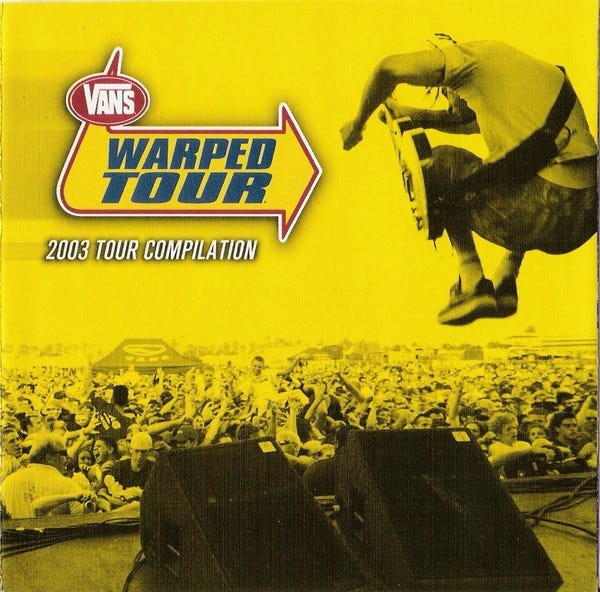
Is it possible to relive your teenage years? With the Warped Tour, you just might be able to. During the peak of its popularity and influence in the late ‘90s and early ‘00s, the Warped Tour was truly scene-creating and agenda-setting to a certain strata of outsider teenager. The concept was that a large selection of alternative bands would all travel around the United States and Canada together over the summer, playing relatively short sets at randomly assorted times. Tickets were cheap, and the festival was squarely focused on a young demographic, fans who lacked the cash or ability to travel but came with oodles of enthusiasm and energy. No bother, all of the up-and-coming bands you and your peers were listening to would come to you. You’d just have to bring yourself and all your friends.
I never went to Warped Tour; it was in the US and Canada, and I was 14 and lived in England. So both the positives and negatives of it were experienced vicariously. What was super accessible for North American teens was utterly out of reach for me. But I felt its pulsing cultural pull across the sea for years.
Touring each summer from 1995-2019, the Warped Tour’s (Vans Warped Tour after being sponsored by the shoe company) forte was Pop Punk, Emo, Post-Hardcore, Ska, Screamo and other genres heavily favoured by teens and young adults. The first line-up included No Doubt playing alongside Deftones, Sublime and No Use for a Name. In other years, NOFX, Less Than Jake (played it 16 times), Pennywise, Lagwagon and even Dropkick Murphys got their start at Warped running the catering BBQ. Katy Perry played it once, as did Eminem. Over the course of nearly three decades, the line-up’s core would still primarily be Pop Punk, but always seasoned with a selection of outsider genres and artists to keep things interesting. Blink-182 toured it four years in a row during their initial rise, before becoming the main draw at the 2000 shows thanks to their mainstream breakthrough. My Chemical Romance famously cut their live teeth on the 2004 and 2005 tour, with their flailing, alcohol-soaked shows becoming a shocking draw. Neon Pop Punk, Dance Punk and even Crunkcore would feature in later years, during which, to some critics, the festival began to lose its identity somewhat. A bit too trend-chasing and needy. But still, Warped was Warped, as comfortable and familiar as a well-worn black band T-shirt.
It was a brief spark in time where subculture could become your world for a day, no school, no job, few parents. All of the bands you adored and all the kids just like you that you could ever want to meet. It became a rite of passage for many American teenagers and sank its culture deep into the genres it helped shape.
Obviously, as the years have passed, there’s been a critical reappraisal of some aspects of Warped, especially its wonky attitude towards safeguarding its often very young attendees. The lack of a barrier between bands and audience led to frequent enough stories of bands manipulating and even abusing the young, inexperienced fans, away from home and full of excitement. Alongside an attitude of unexamined masculinity that was never far away from even the most pseudo-sensitive of heartbroken boybands. The famous comment that feminist writer Jessica Hopper uses that the boys were on stage performing and the girls were in the crowd adoring. Less severe were the accusations of Vans being a brazenly capitalist sell-out festival, full of merch tents and eager to be bought and sponsored by the highest bidder. These critiques led to a series of introspective articles, especially around the mid-2010s, with headlines such as, “A Feminist Punk Band’s Quest to Create Safer Spaces at Warped Tour,” “Warped Behaviour: Sexual Violence on Tour,” “How Warped Tour Led the Consumerist Music Festival Revolution,” and even more prominently, female artists such as Paramore’s Hayley Williams calling the festival out for past experiences of “brutal misogyny.”
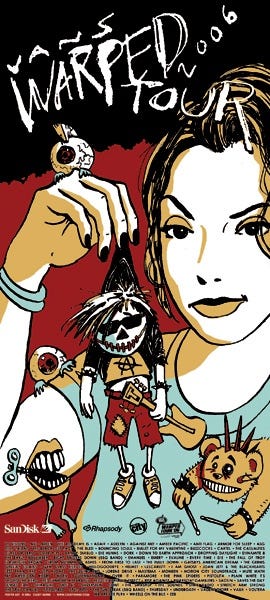
In retrospect, it was a deeply imperfect social setup, initially fueled by a kind of naïve punk rock belief that you should just let the kids do what they wanted and make their own mistakes. But in retrospect, while Warped had an amazing cultural pull and launched the careers of many bands that now dominate the globe, it didn’t always protect the people it claimed to be set up for.
In 2025, around six years since it first ended, Warped Tour rose again. This time stripped down to three gigantic dates in Washington DC, California and Florida, rather than the dozens of years past. The thin margins of the previous touring setup are now shot to bits with the cost-of-living crisis and tidal wave of post-COVID inflation. Tickets now start at $150, snort-worthy compared to around $30 twenty years ago, but that’s the music industry these days. The line-up is similar, with in many ways almost the exact same bands from previous years: The Vandals, Black Veil Brides, Anberlin, Rise Against, alongside modern scene stalwarts like Mom Jeans and LØLØ. If you’re in the mood for a certain slice of nostalgia and music, it’s a decent offering.
This revamp obviously comes despite the aforementioned critiques of the festival and its culture, and in the midst of the general progress in music spaces to be more aware of the kind of damage that both ignorant and malicious behaviours can do, especially to young fans by seemingly untouchable musicians. The most positive reading of this is that this second run will have learnt the lessons of the first, from the ground up.
But the audience is different now too. It’s not for the children, it’s for the adults. Millennial nostalgia is big business, with multiple festivals now catering almost entirely to reliving teenage years. From the Warped Tour’s main gigantic rival When We Were Young, set up in Las Vegas with a similar line-up and boasting enormous headliners like Green Day and Panic! at the Disco, to smaller festivals like Ohio Is for Lovers or A Very Emo Valentine’s Music Fest, catering to more road-worn second-tier bands. The best of these festivals blend their explicitly nostalgia-focused rosters with newer up-and-coming acts, giving these new faces a chance to get themselves out there, while ensuring that the focus is mostly on the legacy acts. But ultimately Warped isn’t an outlier; it’s very much marching in lockstep with this trend.
Most of these festivals launched just before or after COVID, and are driven by two clear trends. Millennials are now looking back on their teenage years with fondness, and Millennials are now increasingly wealthy. Most millennials as a generation are now well clear of their 20s, with the average age being around 35. A lot of people spent a lot of time indoors during COVID, retreating back into the music of their youth, and they emerged ready to embrace that again without irony or apology. I know I did. It gave them comfort, and now they want to celebrate that. During your teenage years, your passion is unlimited and fierce; once in your 20s, you tend to drift away from teenage passions, seeing them at best as a passing fad and at worst seriously cringey and something to define your adult self against. But once you move into your 30s, there’s no one to impress anymore; you return to the childish things that once made you smile, and can embrace them in an honest way. Once you have real responsibilities, jobs, property, kids, parents who now need you to look after them, the idea of playing cultural games with what’s hot and what’s not fades, and you just want to have a good time with your friends. Much like when you were 15.
More hard-edged, and maybe a bit yucky, your 30s is also a time when disposable income seriously opens up. Careers start kicking into high gear, inheritances can happen. No more scrounging around for change to get tickets for a show, no more begging, borrowing or stealing to get that hot ticket. No more asking your parents for money. Why not spend your paid time off and quarterly bonus on a multi-day holiday to Las Vegas or LA, staying in a nice suite and enjoying the bands that first got you into music 20 years ago? It’s not cool, it’s not rock ‘n’ roll, but it’s appealing. Millennials are entering their Boomer cruise era, where they have the cash to splurge and can reform the cultural landscape around them as they see fit. I’m sure we’ll all be going to see Green Day when they’re in their 90s. Rolling Stones, watch out.
Should Warped have stayed gone, like the Give It a Name festival in my last essay, so gone that even the venue has now been demolished? I’m sympathetic to people who wish it had. The name is revered, yes, but also tarnished to some irredeemably by its past repeated mistakes. And the revamp version is so hilariously on point, with a small number of expensive shows aimed at ageing fans just looking for something warm and simple. Is that really what we’re spending our energy on? Why not try something new? Sure thing, but the world is tiring and comfort is a normal cycle; nostalgia isn’t a threat so much as inevitable. Besides, could a modern-day throwback Warped Tour of small bands actually touring the country on a shoestring budget with no overheads work? Maybe. It would be cool, but it’s dicey. Ultimately, if some pioneers feel it could work starting out on a defiant new tour free of the Warped name, it would be a worthy challenge. But it’s also a real gamble, which 2025’s Warped Tour is not.
I don’t really hold it against the attendees. While I do sincerely hope the festival is a more mature and welcoming space for the younger fans than it was first time around, I don’t think that’s such a steep ask. It can be done with the will. And hopefully, alongside this growth and development, a serious mindset in terms of keeping people safe alongside a fun, relaxed one that embraces past acts and new ones, Warped Tour can be the festival it always promised to be.
Previously published at Perfect Sound Forever
I was supposed to go to Warped Tour in 2018. Then life stuff happened and I ended up having to move cities. Maybe it's better that I didn't get to go. It's very likely I would have hated the festival atmosphere anyway (too hot, too much standing up, not enough bathrooms, no friends to go with). I'm content to remember it as this legendary thing that happened during my childhood. Sort of like how people from the '60s speak about Woodstock even if they didn't go themselves.